
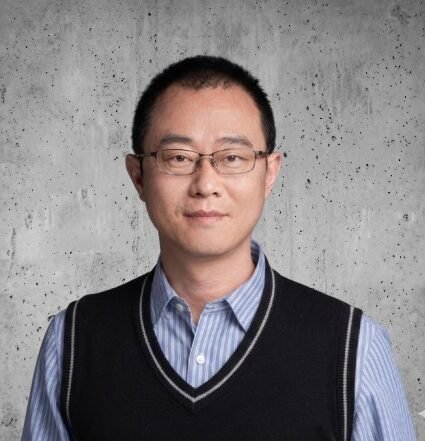
Jianzhong Yang
As a former member, I stepped down in 2021. In 2023, there was a change in my workplace. The differences in cultural regions have given me a new understanding of cultural psychiatry. I hope to further develop professionally with the help of WACP and continue to serve WACP. Therefore, I am applying to become a committee member again.
I was born in 1974 at a small beautiful city named GeJiu in Yunnan Province which is located close to Vietnam and is famous for its product Tin. At that time, many Chinese’ families’ destination dedicated their life to the country, so my name also had this function. JianZhong means contributed to the building (Jian) of China (Zhong).
After that, in the rapid development of the country, like other students in China, I gradually grew up. I started as an elementary school student, then became a medical student, progressed to a junior doctor, and now I am a senior physician (chief physician). In the earliest days, at the end of the 1990s, I followed my teacher in the outpatient department and mainly saw patients with schizophrenia. Now, when I take students to the outpatient department, we see more patients with depression and anxiety disorders, and many of them are students, especially left-behind children whose parents work outside their hometowns.
Two years ago, I left my hometown in Yunnan and went to work in Hangzhou, Zhejiang Province, which is more economically developed in China. As a leading province in China's economic development, I have seen both similarities and differences between Zhejiang and Yunnan.
Zhejiang is a region that includes coastal areas and plains. Its climate is often affected by typhoons. People living along the coast need to go out to sea for their livelihoods, while those in the inland plains face the economic influence and competition from Shanghai, which acts like a "suction pump" drawing resources and talent. Therefore, for Zhejiang people to develop, they must work even harder. This spirit of striving and adaptability has been integrated into the essence of the local culture.
In contrast, Yunnan has a mild climate, numerous mountainous areas, and abundant vegetation. The local people can sustain themselves through local farming. Moreover, Yunnan is home to many ethnic minorities, and its remote location from the Central Plains and inconvenient transportation have contributed to the development of a mild and tolerant character among its people.
Zhejiang people are often characterized as shrewd and pragmatic, with a pioneering and enterprising spirit. In contrast, Yunnan people are frequently described as simple and warm-hearted, with an easygoing and cheerful disposition. Essentially, these differences reflect the distinct influences of plain/maritime civilizations versus mountainous/frontier civilizations. They are also manifestations of the varying degrees of marketization and the richness of ethnic cultural diversity.
As a clinical physician, I have also observed the differences and similarities in the diagnosis and treatment processes between the two regions. The similarities are as follows: First, in general hospitals, depression is a major condition in both places. Second, children are the major population among those with depression. Third, the treatment methods are similar, involving pharmacotherapy, psychotherapy, and physical therapy. Most importantly, the suffering experienced by patients with mental illnesses is the same.
The differences lie in the following aspects: First, as is the case worldwide, anxiety and insomnia, which have become common and frequent psychiatric conditions, have seen a marked increase in Zhejiang. Second, compared with Yunnan, Zhejiang also has a significant number of left-behind children. However, unlike those in Yunnan, the parents of these children in Zhejiang are more likely to work abroad, and these children come from families with better economic conditions. Therefore, for left-behind children, it is not economic resources but high-quality parental companionship that is the crucial protective factor in preventing illness. Third, there is a difference in academic pressure among student populations. Students in Yunnan face academic pressure under conditions of limited resources, while those in Zhejiang face high academic pressure despite relatively abundant resources. For example, the age at which students begin boarding school and the proportion of boarders are both lower in Yunnan. In contrast, in Zhejiang, students start boarding at a younger age and the proportion of boarders is higher. Boarding during the school-age years inevitably leads to students being separated from their parents at an early age, which is often accompanied by psychological health crises. Fourth, as a more developed province in China, Zhejiang has richer medical resources, a wider range of available treatment options, and patients with better financial capacity to pay for medical care. However, do these differences in resources and financial capacity translate into differences in treatment outcomes, recovery, rehabilitation, and prognosis for patients?
These issues and differences are related to the geographical locations, lifestyles, economic conditions, historical and cultural heritage, economic models and social structures, distribution of medical resources, local policies and service systems, and traditional medical resources of different regions. Therefore, after stepping down as a committee member in 2021, I increasingly felt that the confusion in my heart could only be resolved by returning to the field of cultural psychiatry to explore and seek answers.